Many English learners stop and think when they hear or write a sentence like “Things have changed” or “Things has changed.”
Both words, have and has, are common in English, but choosing the correct one is not always easy. This is especially true for beginners and people learning English as a second language.
The confusion usually happens because learners focus on the word changed instead of the subject.
They may also remember grammar rules only partly, so they guess which helping verb sounds right. Sometimes they hear different people speaking quickly and become even more unsure.
The good news is that this grammar topic is much easier than it looks. Once you understand how have and has work with singular and plural subjects, you will be able to use them with confidence.
You will also notice this pattern in books, movies, conversations, emails, and social media posts.
Learning this rule helps you speak and write more naturally. It also improves your grammar in school, exams, business emails, and everyday conversations.
By the end of this guide, you will clearly understand when to use have changed and has changed, why things have changed is correct, the grammar rules behind it, and how to avoid common mistakes that many English learners make.
What Does “Have” Mean?
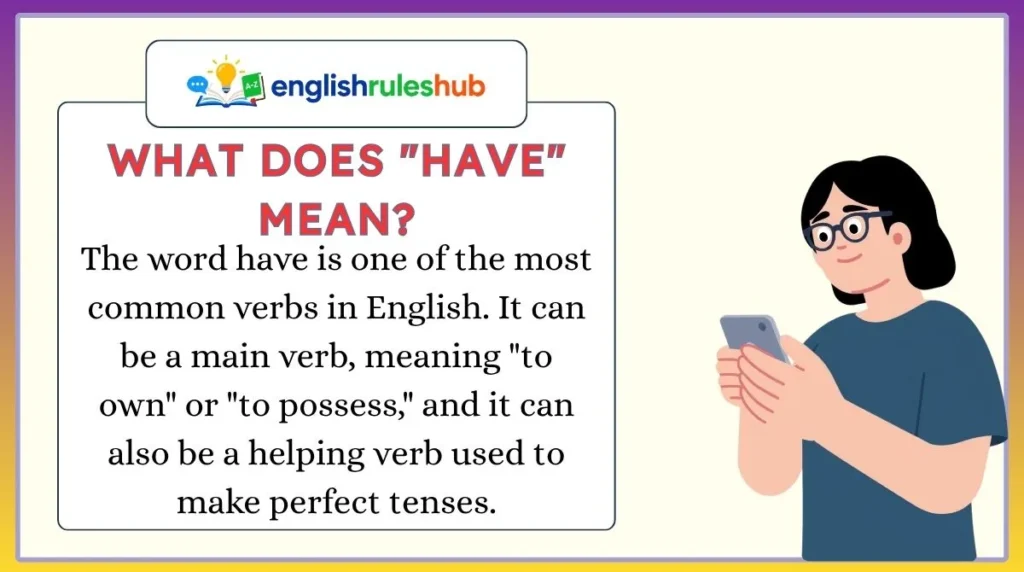
The word have is one of the most common verbs in English. It can be a main verb, meaning “to own” or “to possess,” and it can also be a helping verb used to make perfect tenses.
In the sentence “Things have changed,” the word have is a helping verb. It works with the past participle changed to form the present perfect tense.
When Do We Use “Have”?
Use have with:
- I
- You
- We
- They
- Plural nouns
Since things is a plural noun, the correct helping verb is have.
Grammar Rule
Plural subject + have + past participle
Formula:
Subject + have + past participle
Examples:
- Things have changed a lot.
- My friends have arrived.
- The children have finished their homework.
- We have learned many new words.
- You have done a great job.
- Birds have flown away.
- These books have helped me.
- People have become more careful.
Common Learner Confusion
Many students think that because changed ends with -ed, they should use has. That is not correct.
The helping verb depends on the subject, not on the main verb.
Look at these examples:
✅ The rules have changed.
❌ The rules has changed.
The subject rules is plural, so have is correct.
Another example:
✅ My ideas have changed.
❌ My ideas has changed.
Always ask yourself:
Is my subject singular or plural?
If it is plural, use have.
What Does “Has” Mean?
Like have, the word has can also be a main verb or a helping verb.
In sentences like “The weather has changed,” it acts as a helping verb in the present perfect tense.
When Do We Use “Has”?
Use has with:
- He
- She
- It
- Singular nouns
- One person, place, animal, or thing
Grammar Rule
Singular subject + has + past participle
Formula:
Subject + has + past participle
Examples:
- She has changed her mind.
- He has finished the work.
- The weather has changed.
- My brother has moved to another city.
- The company has grown quickly.
- The dog has eaten its food.
- The teacher has explained the lesson.
- My phone has stopped working.
Common Learner Confusion
Many learners see the word has more often because they study sentences like:
- He has…
- She has…
- It has…
Later, they mistakenly use has with plural nouns.
Incorrect:
❌ The students has finished the test.
Correct:
✅ The students have finished the test.
Remember, students is plural.
Another common mistake:
❌ My parents has arrived.
Correct:
✅ My parents have arrived.
The helping verb always matches the subject.
Difference Between “Have” and “Has” (Detailed)
Understanding the difference becomes easy when you remember one simple idea:
The subject decides whether you use have or has.
| Feature | Have | Has |
|---|---|---|
| Used with | I, You, We, They, plural nouns | He, She, It, singular nouns |
| Subject type | Plural (and I/You) | Singular |
| Present perfect | Yes | Yes |
| Everyday English | Very common | Very common |
| Example | Things have changed. | Life has changed. |
Usage Difference
The biggest difference is the number of the subject.
Plural subjects use have.
Examples:
- Cars have become safer.
- Phones have improved.
- My friends have visited me.
- Things have changed over the years.
Singular subjects use has.
Examples:
- My car has become old.
- The phone has improved.
- My friend has visited me.
- Life has changed a lot.
Grammar Logic
English verbs often change depending on the subject.
Think of it this way:
One person or one thing → has
More than one person or thing → have
Examples:
One student → The student has learned.
Two students → The students have learned.
One idea → The idea has changed.
Many ideas → The ideas have changed.
Sentence Structure Difference
With have:
Plural subject + have + past participle
Examples:
- The teachers have prepared the lesson.
- Dogs have become popular pets.
- My cousins have arrived.
With has:
Singular subject + has + past participle
Examples:
- The teacher has prepared the lesson.
- My dog has become healthier.
- My cousin has arrived.
Meaning Comparison
The meaning does not change between have and has.
Only the subject changes.
Compare these:
- The weather has changed.
- The seasons have changed.
Both talk about change.
The difference is simply that weather is singular, while seasons is plural.
Another comparison:
- My opinion has changed.
- My opinions have changed.
Again, the idea is the same. The helping verb changes because the subject changes.
Why “Things Have Changed” Is Correct
Now let’s answer the main question.
Which sentence is correct?
✅ Things have changed.
❌ Things has changed.
Why?
The word things is the plural form of thing.
Singular:
- thing
Plural:
- things
Plural nouns always take have in the present perfect tense.
Examples:
- Things have improved.
- Things have become easier.
- Things have changed since last year.
- Many things have happened today.
- Some things have stayed the same.
- Our plans have changed.
If the subject becomes singular, use has.
Examples:
- Everything has changed.
- One thing has changed.
- The situation has changed.
- My life has changed.
Notice the difference:
- Thing → has
- Things → have
This is the key rule that solves the confusion.
More Examples Side by Side
| Correct Sentence | Reason |
|---|---|
| Things have changed. | “Things” is plural. |
| One thing has changed. | “Thing” is singular. |
| Everything has changed. | “Everything” is singular. |
| Many things have changed. | “Things” is plural. |
| Life has changed. | “Life” is singular. |
| People’s habits have changed. | “Habits” is plural. |
A simple habit can help you every time:
First, find the subject.
Then ask:
Is it one thing or more than one?
If it is one, use has.
If it is more than one, use have.
That single question will help you avoid this grammar mistake in almost every sentence.
Grammar Rules You Must Remember
Learning just a few grammar rules can help you use have and has correctly every time. These rules are simple, but they are very important because they appear in everyday English.
Rule #1: Use have with plural subjects
If the subject is more than one person, animal, place, or thing, use have.
Pattern:
Plural subject + have + past participle
Examples:
- Things have changed quickly.
- The students have completed the project.
- My parents have arrived.
- These books have helped me learn English.
- The flowers have grown beautifully.
Remember: The subject is the key. If it is plural, choose have.
Rule #2: Use has with singular subjects
If the subject is one person or one thing, use has.
Pattern:
Singular subject + has + past participle
Examples:
- My teacher has explained the lesson.
- The baby has fallen asleep.
- The weather has changed.
- My computer has stopped working.
- One thing has surprised me.
Even if the sentence is long, focus only on the subject.
Example:
- The beautiful old building near my school has changed a lot.
The subject is building, which is singular.
Rule #3: Use the present perfect to talk about change
The present perfect connects the past with the present. It tells us that something started or happened before now and still matters now.
Examples:
- Things have changed since 2020.
- She has improved her English.
- They have moved to another city.
- Life has become easier with technology.
- We have learned many new skills.
Notice the words that often appear with the present perfect:
- since
- for
- already
- yet
- recently
- lately
- ever
- never
- just
Examples:
- Things have changed a lot since last year.
- She has just finished her homework.
- We have recently started a new course.
Rule #4: Ignore the words between the subject and the verb
Sometimes extra words make the sentence look confusing.
Always find the real subject first.
Examples:
- The books on the table have disappeared.
- The teacher with the students has arrived.
- My brother and sister have traveled abroad.
- One of my friends has called me.
Let’s look at them closely.
The books on the table have disappeared.
The subject is books, not table.
The teacher with the students has arrived.
The subject is teacher, not students.
Many learners make mistakes because they look at the nearest noun instead of the real subject.
Common Mistakes Students Make
Almost every English learner makes mistakes with have and has at first. The good news is that these mistakes are easy to fix once you understand why they happen.
Mistake 1: Using has with plural nouns
Wrong:
- Things has changed.
- My friends has arrived.
- The children has finished eating.
Correct:
- Things have changed.
- My friends have arrived.
- The children have finished eating.
Tip: If there is more than one person or thing, use have.
Mistake 2: Using have with singular nouns
Wrong:
- My father have changed his job.
- The weather have improved.
- The car have stopped.
Correct:
- My father has changed his job.
- The weather has improved.
- The car has stopped.
Tip: One person or one thing always takes has.
Mistake 3: Looking at the nearest word instead of the subject
Example:
Wrong:
- The box of books have fallen.
Correct:
- The box of books has fallen.
The subject is box, not books.
Another example:
Wrong:
- One of the students have finished.
Correct:
- One of the students has finished.
The subject is one, which is singular.
Mistake 4: Forgetting that words like “everyone” are singular
Many learners think these words are plural because they refer to many people.
They are actually singular.
Examples:
- Everyone has arrived.
- Everybody has finished.
- Someone has called.
- Nobody has answered.
- Everything has changed.
Mistake 5: Mixing up the present perfect and the simple past
Compare these:
Present perfect:
- Things have changed.
Simple past:
- Things changed yesterday.
The first sentence tells us that the change is connected to the present.
The second sentence simply tells us something happened in the past.
Easy Trick to Remember the Difference
Many students memorize grammar rules but forget them during conversations. A simple memory trick works much better.
The “One or Many?” Trick
Before choosing have or has, ask yourself one question:
Is the subject one or many?
If the answer is one, use has.
If the answer is many, use have.
Examples:
One phone → The phone has broken.
Many phones → The phones have broken.
One friend → My friend has arrived.
Many friends → My friends have arrived.
One problem → The problem has disappeared.
Many problems → The problems have disappeared.
The Finger Counting Trick
Imagine counting with your fingers.
One finger = has
Two or more fingers = have
Children often remember this trick because it is simple and visual.
Replace the Subject
Another easy trick is to replace the noun with a pronoun.
Examples:
The dog → It
It has changed.
The dogs → They
They have changed.
Things → They
They have changed.
Life → It
It has changed.
If the pronoun sounds right, your helping verb will also be right.
Think About Everyday Speech
Native English speakers naturally say:
- Things have changed.
- People have changed.
- Times have changed.
But they say:
- Life has changed.
- The world has changed.
- My family has grown.
Listening for these patterns will help your brain remember them naturally.
Daily Life Examples
These examples show how have and has are used in real conversations.
Conversation 1
A: Do you still live here?
B: No. Things have changed a lot.
Conversation 2
A: Is your brother still in college?
B: No. He has graduated.
Conversation 3
A: Why is this town different now?
B: Many buildings have changed.
Conversation 4
A: How is your English?
B: It has improved a lot.
Conversation 5
A: Where are your friends?
B: They have gone home.
Conversation 6
A: Why are you smiling?
B: My exam result has arrived.
Conversation 7
A: Do you still use that old phone?
B: No. Technology has changed so much.
Conversation 8
A: Your children are so tall now.
B: Yes. They have grown very fast.
Conversation 9
A: Is this your first visit here?
B: No. The city has changed since my last visit.
Conversation 10
A: Are your plans the same?
B: No. Our plans have changed completely.
These examples show how often the present perfect appears in daily English. Once you notice the pattern, using it becomes much easier.
Practice Section
Try these sentences before looking at the answers. Choose have or has.
Question 1
Things __ changed since last summer.
A. have
B. has
Question 2
My sister __ changed her hairstyle.
A. have
B. has
Question 3
The students __ completed the project.
A. have
B. has
Question 4
Everything __ changed after the meeting.
A. have
B. has
Question 5
My parents __ moved to a new house.
A. have
B. has
Answers
- A. have ✅ Things is a plural noun, so have is correct.
- B. has ✅ My sister is one person, so use has.
- A. have ✅ Students is a plural noun.
- B. has ✅ Everything is always singular in English.
- A. have ✅ Parents means more than one person, so use have.
If you answered all five correctly, you’re already getting comfortable with this grammar rule. If you made one or two mistakes, don’t worry. Read the examples again and keep practicing. The more you read and speak English, the easier this rule becomes.
FAQs
What is the difference between have changed and has changed?
The difference depends on the subject of the sentence. Use have changed with plural subjects like things, people, or students. Use has changed with singular subjects like life, the weather, or my friend. The meaning stays the same; only the subject changes.
Is things have changed grammatically correct?
Yes, it is completely correct. The noun things is plural, so it must be followed by have. The sentence Things have changed is the correct form in standard English.
Why is things has changed incorrect?
It is incorrect because things is a plural noun, while has is only used with singular subjects. The correct sentence is Things have changed.
Can we use have and has in questions?
Yes. Both words are commonly used to make present perfect questions.
Examples:
- Have you finished your homework?
- Has she called you?
- Have the students arrived?
- Has the train left?
Always choose have or has based on the subject.
Is the present perfect tense formal or informal?
The present perfect tense is used in both formal and informal English. You will hear it in everyday conversations, classrooms, news reports, business emails, books, and academic writing. It is one of the most useful grammar structures in English.
How can I remember when to use have or has?
The easiest way is to ask yourself, “Is the subject one or more than one?” If it is one person or one thing, use has. If it is more than one, use have. This simple trick works in most sentences.
Final Conclusion
Many English learners wonder whether they should say things have changed or things has changed.
The answer becomes simple once you remember one basic grammar rule: plural subjects use have, and singular subjects use has.
Whenever you are unsure, don’t look at the verb changed. Instead, find the subject first. If the subject is thing, life, weather, or everything, use has. If the subject is things, people, books, students, or parents, use have.
Learning this small rule will make your English sound more natural and accurate. You’ll notice it in conversations, books, movies, emails, and exams.
With regular reading, speaking, and writing practice, choosing between have and has will soon become automatic.
Keep practicing with your own sentences every day. Even writing five simple examples can help you build confidence.
Small grammar improvements lead to stronger English, and every lesson brings you one step closer to speaking and writing like a confident English user.

I am Benjamin Clark, an English language writer passionate about simplifying grammar, vocabulary, and word meanings. I create clear, accurate, and practical content to help learners improve their English skills with confidence every day.