Many English learners feel confused when they see has been, have been, and had been. These three forms look very similar, but they are not used in the same way.
A student may say, “I have been busy all day,” and then hear someone else say, “She has been busy all day.” Later, they read, “He had been busy before dinner.” At that point, the confusion begins.
The good news is that these grammar forms are not as difficult as they seem. Once you understand the subject, time, and verb tense, choosing the correct form becomes much easier.
These expressions are very common in daily English. People use them when talking about work, school, travel, feelings, experiences, and actions that happened over a period of time.
Has been and have been usually connect the past with the present. Had been usually talks about something that happened before another event in the past.
After reading this guide, you will clearly understand:
- When to use has been
- When to use have been
- When to use had been
- The differences between them
- Common mistakes learners make
- Easy tricks to remember the rules
- Real-life examples and practice exercises
By the end, you should feel much more confident using these grammar structures in speaking and writing.
What Does “Has Been” Mean?
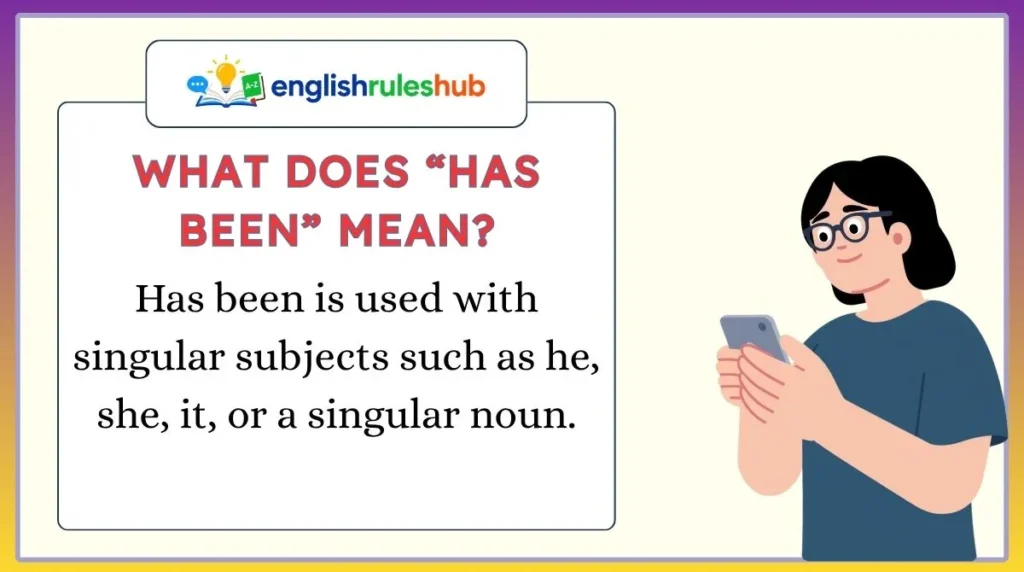
Has been is used with singular subjects such as he, she, it, or a singular noun.
It is part of the present perfect tense or present perfect continuous tense.
Grammar Rule
Subject + has been + complement
or
Subject + has been + verb-ing
When to Use Has Been
Use has been when:
- The subject is singular.
- An action started in the past and continues now.
- A situation began in the past and is still true.
- You are talking about recent experiences connected to the present.
Examples of Has Been
- She has been happy all week.
- He has been sick since Monday.
- The weather has been cold lately.
- My teacher has been very helpful.
- Sarah has been studying for three hours.
- The dog has been sleeping on the sofa.
- The store has been closed since morning.
- My brother has been working hard recently.
Common Learner Confusion
Many learners use have been with singular subjects.
❌ She have been tired.
✅ She has been tired.
Remember that has goes with singular subjects.
Singular subjects include:
- He
- She
- It
- Ahmed
- The boy
- My sister
- The company
Whenever the subject is singular, has been is usually the correct choice.
What Does “Have Been” Mean?
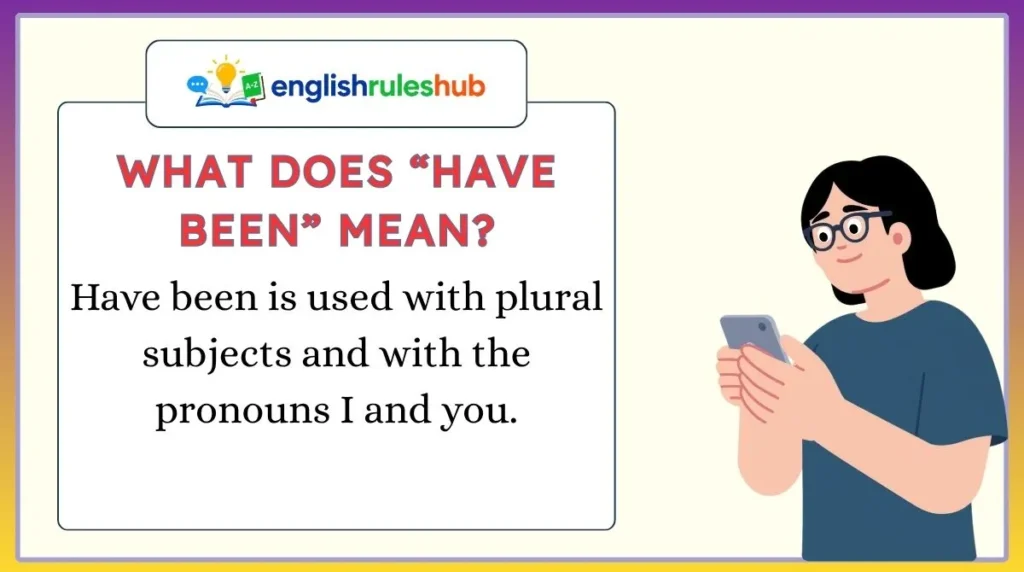
Have been is used with plural subjects and with the pronouns I and you.
Like has been, it is used in the present perfect and present perfect continuous tenses.
Grammar Rule
Subject + have been + complement
or
Subject + have been + verb-ing
When to Use Have Been
Use have been when:
- The subject is plural.
- The subject is I or you.
- An action started in the past and continues now.
- The situation still has a connection to the present.
Examples of Have Been
- I have been busy today.
- You have been very kind.
- We have been friends for years.
- They have been waiting for an hour.
- The students have been studying all morning.
- We have been living here since 2020.
- You have been working too hard.
- My parents have been traveling recently.
Common Learner Confusion
Many students think I has been is correct.
❌ I has been tired.
✅ I have been tired.
Also remember:
❌ They has been waiting.
✅ They have been waiting.
The helping verb have is used with:
- I
- You
- We
- They
- Plural nouns
Difference Between Has Been and Have Been and Had Been
The biggest difference is the subject and the time reference.
Comparison Table
| Form | Subject | Time Reference | Example |
|---|---|---|---|
| Has Been | Singular | Past connected to present | She has been busy all day. |
| Have Been | I, You, We, They, Plural | Past connected to present | They have been busy all day. |
| Had Been | Any subject | Before another past event | They had been busy before dinner. |
Usage Difference
Has been and have been focus on something that started in the past and still matters now.
Examples:
- She has been sick since Tuesday.
- We have been waiting for two hours.
The situation continues into the present.
Had been talks about a situation that existed before another moment in the past.
Example:
- She had been sick before she visited the doctor.
The focus is completely in the past.
Sentence Structure Difference
Has Been
Subject + has been + noun/adjective/verb-ing
Example:
- He has been working all day.
Have Been
Subject + have been + noun/adjective/verb-ing
Example:
- They have been working all day.
Had Been
Subject + had been + noun/adjective/verb-ing
Example:
- They had been working all day before they went home.
Meaning Comparison
Look at these sentences:
She has been tired all day.
Meaning: She started feeling tired earlier and is still tired now.
She had been tired all day before she went to bed.
Meaning: The tiredness happened in the past before another past event.
This small change in grammar changes the time meaning completely.
What Does “Had Been” Mean?
Had been is used in the past perfect tense and past perfect continuous tense.
It shows that one action or condition happened before another event in the past.
Grammar Rule
Subject + had been + complement
or
Subject + had been + verb-ing
When to Use Had Been
Use had been when:
- Talking about two past events.
- One event happened earlier than another.
- You want to show the order of past actions.
Examples of Had Been
- She had been sick before she visited the hospital.
- They had been waiting for hours before the bus arrived.
- I had been studying before the exam started.
- We had been friends for years before moving away.
- He had been working there before he changed jobs.
- The children had been playing before it rained.
- Sarah had been living in London before moving to Paris.
- The shop had been closed before the owner returned.
Common Learner Confusion
Some students use had been when talking about the present.
❌ I had been tired today.
✅ I have been tired today.
Since “today” is connected to the present, use have been, not had been.
Grammar Rules You Must Remember
Rule #1: Use Has Been With Singular Subjects
Singular subjects need has been.
Examples:
- She has been busy.
- The cat has been sleeping.
- My brother has been studying.
Rule #2: Use Have Been With I, You, We, They, and Plural Nouns
Examples:
- I have been tired.
- We have been waiting.
- The students have been working.
Rule #3: Use Had Been for Earlier Past Actions
Examples:
- He had been waiting before the train arrived.
- They had been friends before they became business partners.
Rule #4: Look at the Time Reference
Present connection:
- She has been happy lately.
- We have been busy this week.
Past connection:
- She had been happy before the bad news arrived.
Always ask yourself:
Is the situation connected to now or only to the past?
The answer often tells you which form to choose.
Common Mistakes Students Make
Mistake 1: Using Have With Singular Subjects
❌ She have been studying.
✅ She has been studying.
Tip: He, she, and it usually take has.
Mistake 2: Using Has With Plural Subjects
❌ They has been waiting.
✅ They have been waiting.
Tip: Plural subjects take have.
Mistake 3: Using Had Been for Present Situations
❌ I had been busy today.
✅ I have been busy today.
Tip: If the time period includes the present, use has been or have been.
Mistake 4: Forgetting the Second Past Event
❌ She had been tired.
This sentence is not always wrong, but learners often use it without showing the past reference.
Better:
✅ She had been tired before the meeting started.
Mistake 5: Mixing Tenses
❌ He has been waiting before the train arrived.
✅ He had been waiting before the train arrived.
The phrase before the train arrived requires a past perfect structure.
Easy Trick to Remember the Difference
A simple memory trick can help.
Think About Three Questions
Question 1: Is the Subject Singular?
If yes, use has been.
Example:
- She has been busy.
Question 2: Is the Subject I, You, We, They, or Plural?
If yes, use have been.
Example:
- They have been busy.
Question 3: Are You Talking About Something Before Another Past Event?
If yes, use had been.
Example:
- They had been busy before the guests arrived.
Short Memory Formula
- He/She/It = Has Been
- I/You/We/They = Have Been
- Earlier Past = Had Been
Many students write this formula in their notebooks because it is easy to remember during exams and conversations.
Daily Life Examples
These are examples you may hear every day.
- I have been busy at work lately.
- She has been learning English online.
- We have been waiting for the food.
- He has been watching television all afternoon.
- They have been traveling around the country.
- My mother has been cooking since morning.
- You have been using your phone too much.
- The children have been playing outside.
- He had been waiting for the taxi before it arrived.
- We had been talking for hours before midnight.
Conversation Example 1
A: Where is Sarah?
B: She has been studying in her room.
Conversation Example 2
A: Why are you tired?
B: I have been working all day.
Conversation Example 3
A: Were they hungry?
B: Yes, they had been traveling for many hours.
These examples show how naturally these forms appear in spoken English.
Practice Section
Choose the correct answer.
1.
She ___ been working since morning.
A. has
B. have
C. had
2.
They ___ been friends for ten years.
A. has
B. have
C. had
3.
I ___ been waiting for an hour.
A. has
B. have
C. had
4.
He ___ been sleeping before dinner started.
A. has
B. have
C. had
5.
The students ___ been studying all week.
A. has
B. have
C. had
Answers
- A — has
- B — have
- B — have
- C — had
- B — have
FAQs
What is the difference between has been and have been?
The difference is mainly the subject. Has been is used with singular subjects such as he, she, and it. Have been is used with I, you, we, they, and plural nouns. Both usually connect the past to the present.
What is the difference between have been and had been?
Have been is connected to the present. Had been refers to a time before another event in the past. One focuses on the present, while the other focuses only on the past.
Can we use had been without another past event?
Yes, sometimes. However, the earlier past reference should be clear from the context. In many cases, another past event helps make the meaning clearer.
Can has been and have been be used in questions?
Yes.
Examples:
- Has she been studying?
- Have they been waiting?
- Have you been busy lately?
These forms are common in everyday conversations.
Is has been formal or informal?
It can be used in both formal and informal English. You can use it in conversations, emails, school writing, and professional communication.
How do I know whether to use has been, have been, or had been?
Check two things:
- The subject.
- The time reference.
If the subject is singular, use has been. If the subject is plural or I/you, use have been. If the action happened before another past event, use had been.
Final Conclusion
Understanding has been, have been, and had been becomes much easier when you focus on the subject and the time being discussed.
Use has been with singular subjects such as he, she, and it. Use have been with I, you, we, they, and plural nouns. Use had been when talking about something that happened before another event in the past.
Many learners make mistakes because the three forms look similar. The key is to ask a simple question: Is this connected to the present or only to the past? That question often leads to the correct answer.
Practice these structures in your daily speaking and writing. Create your own sentences about work, school, family, and hobbies. The more you use them, the more natural they will feel.
With regular practice, choosing between has been, have been, and had been will become quick, easy, and automatic.

I am Benjamin Clark, an English language writer passionate about simplifying grammar, vocabulary, and word meanings. I create clear, accurate, and practical content to help learners improve their English skills with confidence every day.