English has many words that look or sound almost the same but have completely different meanings.
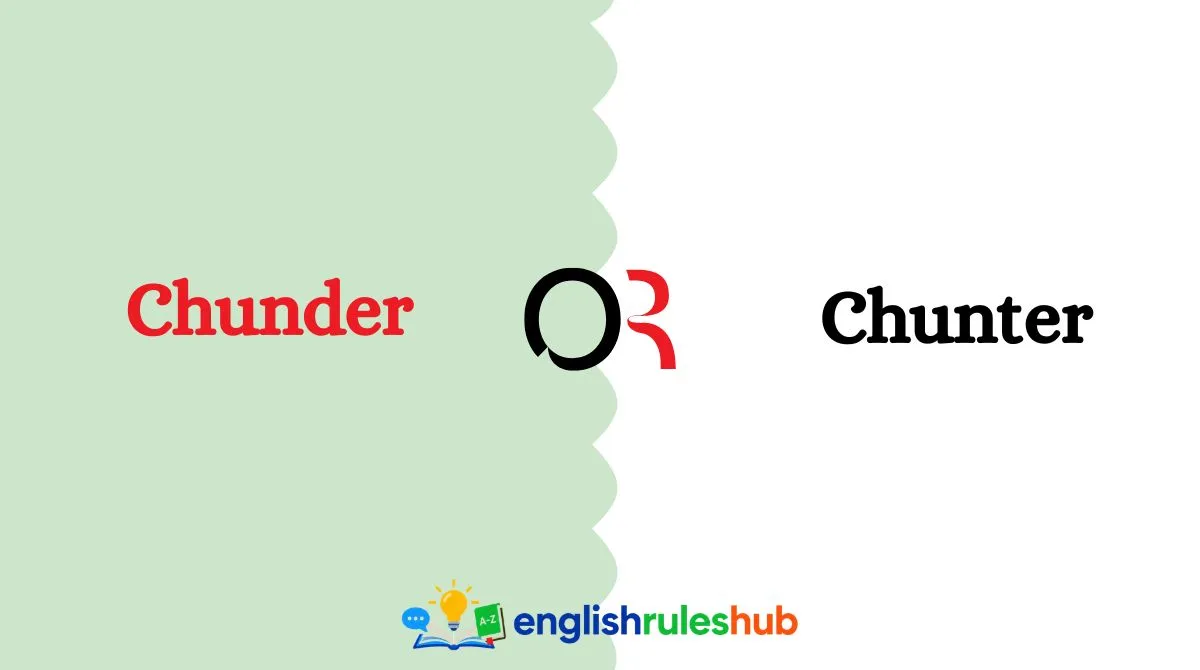
Chunder and chunter are a good example. Both words begin with chun-, and both are informal English words, so learners can easily mix them up when they hear them in conversation.
The difference is actually quite simple once you know what each word describes. Chunder is mainly used to mean vomit or throw up, especially in informal British and Australian English.
Chunter, on the other hand, means to complain or mutter in a low, unhappy voice. It can also describe a machine or engine making a series of low, uneven sounds.
These words are not normally used in formal writing. You are more likely to see or hear them in casual conversations, stories, books, films, or everyday speech.
Learning the difference matters because using the wrong word can make your sentence sound very strange.
For example, saying “He chuntered after drinking too much” does not mean that he vomited. It suggests that he was muttering or complaining. If you mean that he became sick, chundered is the word you need.
By the end of this guide, you will clearly understand chunder vs chunter, their meanings, grammar patterns, common mistakes, everyday uses, and an easy trick to remember which word to use.
What Does “Chunder” Mean?
Chunder is an informal verb that means to vomit or throw up.
It is mainly heard in British and Australian English, although people in other English-speaking places may understand it from movies, television, books, or online conversations.
The word is very informal. It is not normally the best choice for a formal medical situation. In a doctor’s office, for example, you would usually say vomit, be sick, or throw up rather than chunder.
The basic forms are:
- Base form: chunder
- Third-person singular: chunders
- Past tense: chundered
- Present participle: chundering
The word can be used when someone actually vomits, or when talking about the act of vomiting in a casual way.
When Do We Use “Chunder”?
Use chunder when you want to describe vomiting in informal speech.
For example:
He drank too much and chundered outside.
Here, chundered means vomited.
You can also use it in the present tense:
I think I’m going to chunder.
This means:
I think I’m going to vomit.
It is especially common in casual speech when someone feels sick after drinking alcohol, traveling, eating too much, or experiencing another cause of nausea.
Grammar Rule for “Chunder”
Because chunder is a verb, it can be used in several normal verb structures.
Present simple:
He chunders when he drinks too much.
Past simple:
She chundered after the party.
Present continuous:
He is chundering in the bathroom.
Future:
I think I’m going to chunder.
The past form is regular, so you simply add -ed:
chunder → chundered
8 Examples of “Chunder”
- He chundered after drinking too much beer.
- I felt so sick that I thought I was going to chunder.
- She chundered on the side of the road.
- The boy got seasick and chundered over the side of the boat.
- I don’t want to eat another bite, or I might chunder.
- He had too many drinks and ended up chundering outside.
- The rough boat ride made several passengers chunder.
- She felt terrible the next morning and nearly chundered again.
These examples all have one basic idea: someone is vomiting or feels that they are about to vomit.
A Common Confusion About “Chunder”
Some learners see chunder and think it might describe a person who is complaining or making noise, because it sounds similar to chunter.
That is incorrect.
Remember:
Chunder = vomit
Chunter = complain or make a low sound
So:
He chundered after the long bus ride.
means he vomited.
But:
He chuntered about the long bus ride.
means he complained or muttered about it.
The two words may look similar, but their meanings are very different.
What Does “Chunter” Mean?
Chunter is an informal verb with a few closely related meanings.
When a person chunters, they usually complain, grumble, or mutter in a low voice.
For example:
He chuntered about the poor service.
This means that he complained about the poor service, probably in a quiet or irritated way.
Chunter can also describe a machine, engine, or vehicle that makes a low, steady, uneven sound.
For example:
The old tractor chuntered along the road.
Here, chuntered does not mean that anyone was complaining. It describes the sound and movement of the tractor.
So, there are two main ideas behind chunter:
- A person muttering or complaining
- A machine making a low, repetitive sound
When Do We Use “Chunter”?
Use chunter when someone is talking in a low, complaining, or dissatisfied way.
It often suggests that the person is not shouting loudly. Instead, they are speaking under their breath or complaining continuously.
For example:
Dad was chuntering about the cost of the repair.
Dad was complaining about the repair cost.
You can also use chunter for machines:
The old engine chuntered into life.
The engine started making a low, uneven sound.
Grammar Rule for “Chunter”
Like chunder, chunter is a regular verb.
Its common forms are:
- chunter
- chunters
- chuntered
- chuntering
For example:
He chuntered all morning.
She is chuntering about the weather.
The engine was chuntering quietly.
You can use it with about, over, or other phrases depending on what the person is complaining about.
8 Examples of “Chunter”
- He chuntered about the price of the food.
- She was chuntering about having to work late.
- Dad always chuntered when the television stopped working.
- The old tractor chuntered down the narrow road.
- He spent the whole morning chuntering about his neighbors.
- She chuntered under her breath while cleaning the kitchen.
- The small engine chuntered as the boat moved away from the dock.
- He kept chuntering about how unfair the rules were.
Notice that the first group describes people complaining or muttering, while the machine examples describe low, repetitive sounds.
A Common Confusion About “Chunter”
A learner might see:
He chuntered after the party.
and wonder whether this means he vomited.
It does not.
Chuntered normally means complained, muttered, or made a low sound.
If the person vomited, the sentence should be:
He chundered after the party.
That one letter makes a very big difference.
Difference Between Chunder and Chunter (Detailed)
The easiest way to understand the difference is to focus on the action.
Chunder is about vomiting.
Chunter is about complaining, muttering, or making a low sound.
Here is a quick comparison:
| Word | Main meaning | Usually describes | Example |
|---|---|---|---|
| Chunder | Vomit or throw up | A sick person | He chundered after the journey. |
| Chunter | Complain or mutter | A person | He chuntered about the journey. |
| Chunter | Make a low, repetitive sound | A machine or engine | The engine chuntered along. |
Usage Difference
The biggest difference is what is happening.
If someone’s stomach is upset and they vomit, you can use chunder.
The passenger chundered on the boat.
If someone is unhappy and keeps complaining, you can use chunter.
The passenger chuntered about the uncomfortable seats.
The first sentence describes a physical action.
The second describes speech or behavior.
Meaning Difference
Think about these two sentences:
Tom chundered after dinner.
Tom vomited.
Tom chuntered after dinner.
This sentence suggests Tom muttered or complained after dinner. It does not tell us that he vomited.
This is why confusing the two words can create an amusing or confusing situation.
Sentence Structure Difference
Both words are verbs, so they can fit into similar grammar patterns.
For example:
He chundered.
He chuntered.
But the words that follow them can give you a clue about the meaning.
With chunder, the sentence often relates to sickness:
She chundered after drinking too much.
With chunter, the sentence often relates to a complaint:
She chuntered about the poor service.
Or it can relate to a machine:
The engine chuntered along.
Chunder Is More Specific
Chunder has a fairly clear main meaning: to vomit.
Chunter has a wider range of uses.
A person can chunter when they:
- complain
- grumble
- mutter
- speak unhappily under their breath
A machine can also chunter when it makes a low, repetitive noise.
Both Words Are Informal
Neither word should normally be your first choice in formal writing.
Instead of:
The patient chundered.
a formal or neutral sentence would usually be:
The patient vomited.
Instead of:
He chuntered about the delay.
you might write:
He complained about the delay.
This does not mean chunder and chunter are wrong. They simply have a casual and informal flavor.
Grammar Rules You Must Remember
Rule #1: Use “Chunder” for Vomiting
If the meaning is vomit or throw up, use chunder.
He chundered after the boat trip.
Do not use chunter here.
A quick check is to replace the word with vomited. If the sentence still makes sense, chunder may be correct.
Rule #2: Use “Chunter” for Complaining or Muttering
If someone is quietly complaining, grumbling, or muttering, use chunter.
She chuntered about the long wait.
You could replace chuntered with complained.
She complained about the long wait.
The basic meaning stays similar.
Rule #3: “Chunter” Can Describe Machines
Remember that chunter is not only used for people.
Machines, engines, tractors, and vehicles can also chunter.
The old car chuntered up the hill.
Here, the car is making a low, uneven, repetitive sound.
You cannot normally replace chunter with chunder in this sentence.
The old car chundered up the hill.
That would sound as though the car had vomited!
Rule #4: Both Are Regular Verbs
Both words form their past tense by adding -ed.
Chunder → chundered
Chunter → chuntered
Examples:
He chundered last night.
He chuntered all evening.
For the continuous form, add -ing:
He is chundering.
He is chuntering.
The grammar is simple. The important part is choosing the right meaning.
Common Mistakes Students Make
Mistake 1: Using “Chunter” for Vomiting
Wrong:
He chuntered after drinking too much.
If you mean that he vomited, this is the wrong word.
Correct:
He chundered after drinking too much.
Tip: Think of chunder as the informal word connected with being physically sick.
Mistake 2: Using “Chunder” for Complaining
Wrong:
She chundered about the price.
If she was complaining about the price, use chunter.
Correct:
She chuntered about the price.
You could also say:
She complained about the price.
Mistake 3: Forgetting the Machine Meaning of “Chunter”
Some learners think chunter is only about people.
But you can say:
The engine chuntered along.
This describes the engine’s low, repetitive sound.
Mistake 4: Treating Both Words as Formal Vocabulary
Both words are informal.
If you are writing a school essay, academic paper, business report, or formal medical document, simpler standard words are usually better.
For example:
Informal:
He chundered after the journey.
Neutral:
He vomited after the journey.
And:
Informal:
He chuntered about the delay.
Neutral:
He complained about the delay.
Mistake 5: Thinking Similar Spelling Means Similar Meaning
English has many words that look alike but mean different things.
Chunder and chunter are a good reminder that you should learn a word by its meaning and context, not just by its spelling.
Easy Trick to Remember the Difference
Here is a very simple memory trick:
CHUNDER = stomach problem
CHUNTER = talking or machine sound
You can remember the first one with the idea of “under the weather.”
If someone feels sick and throws up, think:
Chunder = chuck up
Both are informal ways of talking about vomiting.
For chunter, imagine someone sitting in a chair and grumbling under their breath:
“This is too expensive… Why is it taking so long?”
That person is chuntering.
You can also remember the machine meaning:
Chunter = a low, chunky engine sound
Picture an old tractor moving slowly:
Chug, chug, chunter…
The exact sound is not important. The idea is that the machine is making a low, repetitive noise.
So your quick memory card can be:
Chunder → vomit
Chunter → complain / mutter / low machine sound
If you remember those three ideas, you will rarely confuse the words.
Daily Life Examples (Very Important)
Here are some natural examples showing how the two words may appear in casual English.
Example 1
A: How was the boat trip?
B: Terrible. I felt seasick and nearly chundered.
Here, chundered means vomited.
Example 2
A: Why is Mike in such a bad mood?
B: He’s been chuntering about his new boss all morning.
Here, Mike is complaining or muttering.
Example 3
A: Did Sarah enjoy the party?
B: Not really. She drank too much and chundered outside.
The word describes vomiting.
Example 4
A: What’s that noise outside?
B: That’s my old tractor chuntering down the road.
Here, chuntering describes the sound of the tractor.
Example 5
A: Why is Dad talking to himself?
B: He’s chuntering about the broken computer again.
Dad is quietly complaining.
Example 6
A: Are you okay?
B: I hope so. I feel like I’m going to chunder.
The speaker feels as though they are going to vomit.
Example 7
A: Why did Tom leave the room?
B: He was chuntering about the noise.
Tom was complaining about the noise.
Example 8
A: Is the old engine still working?
B: Yes. It chuntered into life this morning.
The engine started making its familiar low, uneven sound.
Example 9
A: How was the long bus ride?
B: Awful. One passenger chundered near the back.
Someone vomited during the journey.
Example 10
A: Why does Linda look annoyed?
B: She’s chuntering about having to stay late.
Linda is grumbling or complaining about staying late.
These examples show why context is so useful. If you see words about nausea, drinking, seasickness, or feeling sick, chunder is likely to be the correct choice.
If you see words about complaining, grumbling, muttering, or an old engine, chunter is likely to be correct.
Practice Section
Choose chunder or chunter to complete each sentence.
1. The old tractor began to ______ up the hill.
Answer: chunter
The tractor is making a low, repetitive sound.
2. He drank too much and ______ outside the restaurant.
Answer: chundered
He vomited.
3. She kept ______ about the price of the tickets.
Answer: chuntering
She was complaining about the price.
4. I feel so sick that I might ______.
Answer: chunder
The speaker thinks they might vomit.
5. My grandfather spent the morning ______ about the weather.
Answer: chuntering
He was muttering or complaining about the weather.
A useful way to check your answers is to ask:
Is this about vomiting?
If yes, think chunder.
Is this about complaining or a low machine sound?
If yes, think chunter.
FAQs
What is the difference between chunder and chunter?
Chunder means to vomit or throw up. It is an informal word, especially common in British and Australian English.
Chunter usually means to complain or mutter in a low voice. It can also describe a machine making a low, repetitive sound.
Is “chunder” a formal word?
No. Chunder is an informal word for vomiting.
In formal or neutral English, vomit, be sick, or throw up may be more suitable, depending on the situation. You may hear chunder in casual conversations and informal writing.
Is “chunter” a formal word?
No. Chunter is also generally informal.
When talking about a person, it often means complaining or muttering. When talking about a machine, it describes a low, repetitive sound.
Can “chunder” be used in a question?
Yes. Because chunder is a verb, you can use it in questions.
For example:
Did he chunder after the journey?
You can also ask:
Do you think you’re going to chunder?
These questions are informal because the word itself is informal.
Can “chunter” be used in a question?
Yes.
For example:
Why is he chuntering about the price?
You could also ask:
Is that old engine chuntering again?
The first question is about complaining, while the second is about a machine making a sound.
Is “chunder” the same as “vomit”?
Yes, in its main informal use.
If someone says:
He chundered.
they mean:
He vomited.
However, chunder is much more casual. Vomit is the standard word and is more suitable in formal or neutral situations.
Is “chunter” the same as “complain”?
Not exactly, but they can be very close.
When a person chunters, they often complain or grumble in a quiet, low, or continuous way. The word can suggest that the person is muttering rather than making a loud complaint.
Can a machine chunder?
Normally, no, not in the standard meaning of the word.
A machine or engine can chunter, because chunter can describe a low, repetitive mechanical sound.
For example:
The engine chuntered along.
Chunder is mainly connected with vomiting.
Are chunder and chunter British English words?
Both are strongly associated with informal British English, although chunder is also particularly well known in Australian English.
Their use can vary by region, and not every English speaker uses them regularly. Many learners may understand them from British or Australian media even if they do not use them themselves.
Which word should English learners use?
If you are a beginner, you do not need to use these words in every conversation.
For vomiting, vomit, throw up, or be sick are usually safer choices.
For complaining, complain or grumble are more common.
Learn chunder and chunter mainly so you can understand informal English more easily.
Final Conclusion
The difference between chunder and chunter is much easier once you connect each word with a clear picture.
Chunder means to vomit or throw up. It is an informal word, especially associated with British and Australian English.
Chunter usually means to complain, grumble, or mutter, but it can also describe an old engine or machine making a low, repetitive sound.
The spelling is similar, but the meanings are completely different. If someone feels sick, think chunder.
If someone is quietly complaining, think chunter. If an old machine is making a low, uneven noise, chunter works again.
You do not have to use these informal words yourself. Standard words such as vomit, complain, and grumble are often better for learners.
Still, knowing these expressions will help you understand casual British and Australian English.
The best way to remember them is simple: chunder = vomit; chunter = complain or make a low sound.
Keep these meanings in mind, and you will not have to guess when you see either word.

I am Benjamin Clark, an English language writer passionate about simplifying grammar, vocabulary, and word meanings. I create clear, accurate, and practical content to help learners improve their English skills with confidence every day.