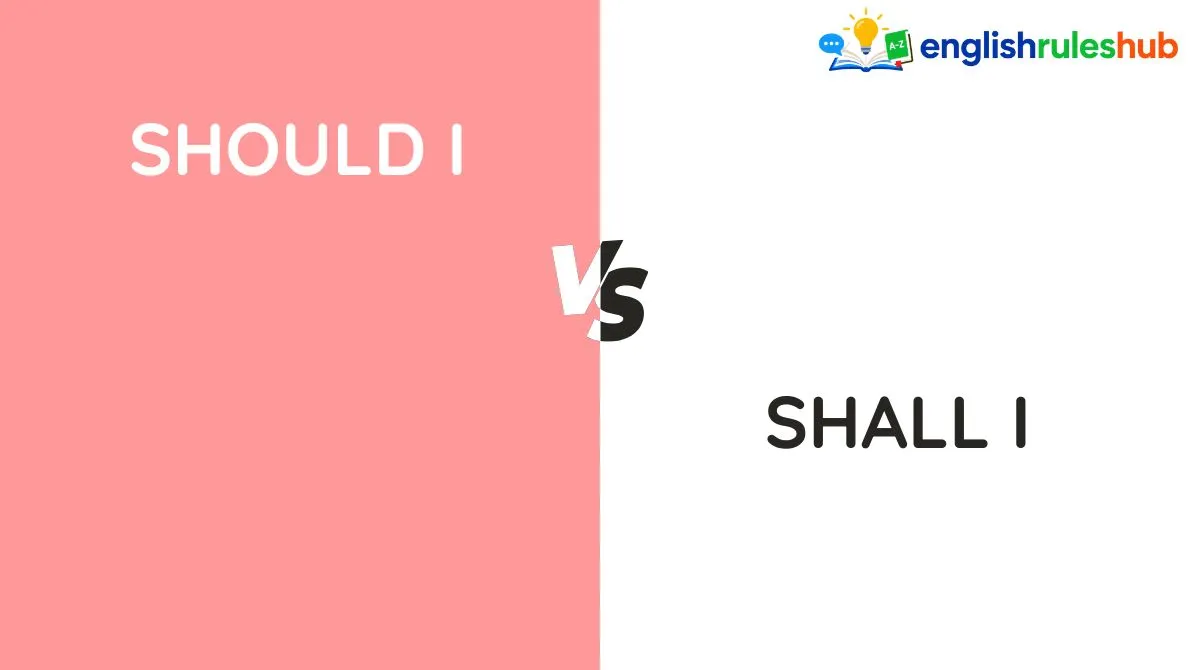
Should I and shall I are two short phrases that often confuse English learners. They look very similar, and both can appear at the beginning of a question. However, they do not always give the same meaning.
For example, you may hear someone say, “Should I call him?” You may also hear, “Shall I call him?” Both questions ask about a possible action, but the speaker’s intention is slightly different.
This can be confusing because English speakers do not use shall and should in exactly the same way.
The difference also depends on the situation, the type of English being used, and whether the speaker is asking for advice, making an offer, or asking what action is appropriate.
The good news is that you do not need to memorize a long list of difficult grammar rules. Once you understand the basic idea, the difference becomes much easier.
Should I is commonly used when you want to ask for advice, guidance, or an opinion. Shall I is often used when you want to offer to do something or ask someone what you should do next, especially in British English.
By the end of this guide, you will understand when to use each expression, how their grammar works, which one sounds more natural in everyday English, and how to avoid common mistakes.
What Does “Should I” Mean?
Should I is used mainly to ask for advice or to ask whether an action is a good, correct, or sensible idea.
The basic structure is:
Should + I + base form of the verb?
For example:
- Should I go?
- Should I call her?
- Should I wait?
- Should I tell him?
- Should I buy this?
- Should I apologize?
When you say “Should I?”, you are usually asking another person for their opinion.
Imagine that you are not sure what to do. You might ask your friend:
“Should I take this job?”
You are not simply asking whether you are going to take the job. You want your friend’s advice.
Your friend might answer:
“Yes, I think you should.”
Or:
“No, I don’t think you should.”
This is one of the most common uses of should.
When Do We Use “Should I”?
We use should I when we want advice about a decision or action.
For example:
Should I call my teacher?
Here, the speaker is unsure whether calling the teacher is the right thing to do.
Should I wear a jacket today?
The speaker wants advice about what would be suitable.
Should I tell Sarah about the meeting?
The speaker is asking whether telling Sarah is a good idea.
The expression can be used for both small and serious decisions.
Grammar Rule for “Should I”
After should, use the base form of the verb.
Correct:
Should I go?
Incorrect:
Should I to go?
Also correct:
Should I call him?
Incorrect:
Should I calling him?
The formula is simple:
Should + subject + base verb
Examples:
- Should I leave?
- Should I stay?
- Should I study?
- Should I wait?
- Should I ask?
- Should I help?
8 Examples of “Should I”
- Should I call you later?
- Should I bring my laptop?
- Should I tell my parents?
- Should I wait here?
- Should I take an umbrella?
- Should I apply for the job?
- Should I apologize to him?
- Should I order the chicken?
In each example, the speaker wants some kind of advice, opinion, or guidance.
A Common Confusion About “Should I”
Some learners think should I means that something must happen. That is not usually the case.
Compare:
Should I leave now?
This means:
“Do you think it would be a good idea for me to leave now?”
It does not mean:
“I must leave now.”
So, should often has the idea of what is right, sensible, advisable, or expected.
What Does “Shall I” Mean?
Shall I is mainly used when asking whether you should do something, especially when offering to do something or asking for instructions about the next action.
The basic structure is:
Shall + I + base form of the verb?
Examples:
- Shall I open the window?
- Shall I help you?
- Shall I call a taxi?
- Shall I start?
- Shall I make some tea?
In many situations, shall I can sound like an offer.
For example, imagine that your friend is carrying several heavy bags. You can ask:
“Shall I help you?”
The meaning is close to:
“Would you like me to help you?”
You are offering your help.
When Do We Use “Shall I”?
We commonly use shall I when we are offering to do something or asking what action we should take.
For example:
Shall I open the door?
The speaker is offering to open the door.
Shall I make you some coffee?
The speaker is offering to make coffee.
Shall I carry that bag for you?
The speaker is offering help.
It can also be used when someone wants instructions:
Shall I wait here?
This can mean:
“Do you want me to wait here?”
British English and “Shall I”
Shall I is especially common in British English. It is perfectly grammatical, but its frequency varies between different types of English.
In everyday American English, speakers often use should I or do you want me to instead.
For example, a British speaker may naturally say:
“Shall I open the window?”
An American speaker might more often say:
“Should I open the window?”
or:
“Do you want me to open the window?”
Neither version is automatically wrong. The choice depends on the speaker, situation, and variety of English.
Grammar Rule for “Shall I”
Just like should, shall is followed by the base form of the verb.
Correct:
Shall I go?
Incorrect:
Shall I to go?
Correct:
Shall I help you?
Incorrect:
Shall I helping you?
The structure is:
Shall + I + base verb
8 Examples of “Shall I”
- Shall I open the window?
- Shall I make some tea?
- Shall I help you with your bags?
- Shall I call a doctor?
- Shall I send you the file?
- Shall I wait outside?
- Shall I book a table?
- Shall I start the meeting?
These questions often sound like an offer or a request for direction.
A Common Confusion About “Shall I”
Learners sometimes believe shall I is simply a more formal version of should I. That is not a complete explanation.
There is some overlap, but the meaning and purpose can be different.
Should I buy this?
This usually asks for advice.
Shall I buy this?
This can sound more like asking whether the speaker should go ahead and do it, especially in British English.
The difference is small in some situations, but it becomes clearer when you look at the speaker’s intention.
Difference Between Should I and Shall I
The easiest way to understand the difference is to focus on the purpose of the question.
Should I usually asks for advice.
Shall I often makes an offer or asks for permission/direction about what to do next.
Here is a simple comparison:
| Expression | Main use | Common meaning | Example |
|---|---|---|---|
| Should I…? | Asking for advice | Is this a good idea? | Should I take the job? |
| Shall I…? | Offering or asking what action to take | Do you want me to do it? | Shall I carry your bag? |
| Should I…? | Asking about the best choice | What do you advise? | Should I wait? |
| Shall I…? | Offering help | Would you like me to? | Shall I help you? |
| Should I…? | Asking what is right | Is this the right thing? | Should I tell her? |
| Shall I…? | Asking for direction | Do you want me to proceed? | Shall I begin? |
Usage Difference
Consider these two sentences:
Should I call John?
You are probably asking:
“Do you think calling John is a good idea?”
Now consider:
Shall I call John?
This can mean:
“Do you want me to call John?”
The difference is not always huge. In real conversations, the two expressions can overlap.
However, the reason behind the question is useful.
If you are thinking about your own decision and want someone’s advice, should I is usually the safer choice.
If you are offering to do something for someone, shall I is often a natural choice, especially in British English.
Grammar Logic
Both expressions are modal verbs.
Modal verbs are followed by the base form of another verb.
So we say:
Should I go?
Not:
Should I goes?
And:
Shall I go?
Not:
Shall I going?
The modal does not change according to the subject.
For example:
Should I go?
Should he go?
Should they go?
We do not say shoulds.
The same applies to shall:
Shall I go?
Shall we go?
Sentence Structure Difference
Both expressions can follow the same basic question pattern:
Modal + subject + base verb?
Examples:
Should I leave now?
Shall I leave now?
The grammar structure is the same. The important difference is meaning and use, not the word order.
Meaning Comparison
Think about this simple situation.
You are at a restaurant and cannot decide what to order. You ask your friend:
“Should I order the fish?”
You want your friend’s opinion.
Now imagine the waiter is ready to clear the table. You ask:
“Shall I take these plates?”
You are offering to do something.
That is the main distinction to remember.
Grammar Rules You Must Remember
Rule #1: Use “Should I” for Advice
Use should I when you want someone to tell you whether an action is a good idea.
Example:
Should I study tonight?
The speaker wants advice.
A possible answer is:
Yes, you should.
Rule #2: Use “Shall I” for Offers
Use shall I when you offer to do something for someone.
Example:
Shall I carry your bag?
The speaker is offering help.
The person may answer:
Yes, please.
or:
No, thanks. I can carry it.
Rule #3: Use the Base Verb After Both Modals
After should and shall, use the base form.
Correct:
Should I go?
Shall I go?
Incorrect:
Should I to go?
Shall I going?
Remember:
should/shall + base verb
Rule #4: “Shall I” Is Especially Common in British English
You will hear shall I more often in British English than in everyday American English.
For example:
Shall I open the door?
is perfectly natural in British English.
In American English, you may hear:
Should I open the door?
or:
Do you want me to open the door?
This does not mean that shall is wrong in American English. It simply means that usage and frequency can vary.
Common Mistakes Students Make
Many learners make mistakes because they try to translate these expressions directly from their first language. English does not always divide ideas in exactly the same way as other languages.
Mistake 1: Thinking “Should I” and “Shall I” Always Mean Exactly the Same Thing
They can overlap, but their common purposes are different.
Less suitable for an offer:
Should I carry your bag?
This is grammatically possible, but it sounds more like asking whether carrying the bag is the right thing to do.
Natural offer:
Shall I carry your bag?
This sounds like an offer, especially in British English.
Mistake 2: Using “To” After Should or Shall
Do not put to after these modal verbs.
Wrong:
Should I to call him?
Correct:
Should I call him?
Wrong:
Shall I to wait here?
Correct:
Shall I wait here?
The rule is easy:
Modal + base verb
Mistake 3: Adding “-ing”
Wrong:
Should I going now?
Correct:
Should I go now?
Wrong:
Shall I making tea?
Correct:
Shall I make tea?
The verb after the modal stays in its simple form.
Mistake 4: Thinking “Shall I” Is Always Very Formal
It can sound polite or slightly formal in some situations, but it is not automatically formal.
In British English, you may hear:
Shall I help you?
in a normal everyday conversation.
However, younger speakers and speakers of other varieties may prefer should I or do you want me to.
Mistake 5: Using “Shall I” When You Clearly Want Advice
Suppose you are deciding whether to accept a new job.
You might say:
Should I accept this job?
This clearly asks for advice.
If you say:
Shall I accept this job?
the sentence is also possible, but it can sound different. It may feel more like asking someone to guide you toward the action you are about to take.
For general advice, should I is usually clearer.
Easy Trick to Remember the Difference
Here is a simple trick.
Think:
SHOULD = advice
SHALL = offer
When you are asking:
“Is this a good idea?”
think should I.
When you are asking:
“Do you want me to do this?”
think shall I.
For example:
Should I buy a new phone?
You want advice.
Shall I carry your phone?
You are offering to help.
Another useful trick is to replace the question with a longer sentence.
If “Do you think I should…?” fits, use should I.
Should I call her?
→ Do you think I should call her?
If “Would you like me to…?” fits, shall I may work well.
Shall I call her?
→ Would you like me to call her?
This trick is not perfect in every situation, but it is very useful for beginners.
Daily Life Examples
Here are some natural examples that you might hear in everyday conversations.
Example 1: At Home
Ali: The room is very hot.
Sara: Shall I open the window?
Ali: Yes, please.
Here, Sara is offering to open the window.
Example 2: Asking for Advice
Tom: I have an exam tomorrow.
Mike: You should study tonight.
Tom: Should I study for three hours?
Mike: Two hours should be enough.
Tom wants advice, so should I is natural.
Example 3: Offering Food
Mother: You look hungry.
Son: A little.
Mother: Shall I make you a sandwich?
Son: Yes, please.
The mother is offering to prepare something.
Example 4: Making a Decision
Emma: I found a new apartment.
Lucy: Is it good?
Emma: Yes, but it is expensive.
Lucy: Should I take it?
Emma: I think you should look at a few more places first.
The question asks for advice.
Example 5: Asking What to Do
Manager: The meeting starts in ten minutes.
Employee: Shall I prepare the documents?
Manager: Yes, please.
The employee is asking whether the manager wants that action to happen.
Example 6: Asking About a Phone Call
John: I need to speak to Mr. Khan.
Receptionist: He is in his office.
John: Should I call him now?
Here, John is asking whether now is a suitable time.
Example 7: Offering Help
A: These boxes are heavy.
B: Shall I help you?
A: Thanks. That would be great.
This is a clear offer.
Example 8: Asking About Leaving
David: The bus is here.
Sam: Should I go now?
David: Yes, you should.
David is giving advice about what Sam should do.
Example 9: At a Restaurant
Customer: We are ready to order.
Friend: Shall I call the waiter?
Customer: Yes, please.
The speaker is offering to call the waiter.
Example 10: Asking for Advice About a Message
Nina: I am angry with my friend.
Maya: What happened?
Nina: She sent me a rude message.
Maya: Should I reply now?
Nina: Maybe wait until you feel calmer.
Here, Nina is asking for advice about the best action.
Practice Section
Choose should I or shall I in each sentence.
1. ______ call the doctor now?
a) Should I
b) Shall I
2. ______ carry those boxes for you?
a) Should I
b) Shall I
3. ______ apply for this job?
a) Should I
b) Shall I
4. ______ make you a cup of tea?
a) Should I
b) Shall I
5. ______ tell my teacher about the problem?
a) Should I
b) Shall I
Answers
1. Should I — The speaker is asking whether calling the doctor is a good idea.
2. Shall I — The speaker is offering to carry the boxes.
3. Should I — The speaker wants advice about a job decision.
4. Shall I — The speaker is offering to make tea.
5. Should I — The speaker wants advice about whether telling the teacher is the right choice.
Remember that real conversations can sometimes allow both forms. The answers above show the most natural choice based on the intended meaning.
FAQs
What is the difference between “should I” and “shall I”?
Should I is mainly used to ask for advice or an opinion about an action. Shall I is often used to make an offer or ask what action the speaker should take next. The two can overlap, but the purpose of the question is usually different.
Can we use “should I” in questions?
Yes. Should I is very common in questions.
For example:
Should I call him?
Should I wait here?
Should I take an umbrella?
These questions usually ask for advice, guidance, or an opinion.
Can we use “shall I” in questions?
Yes. Shall I is used in questions, especially when offering to do something or asking for direction.
For example:
Shall I help you?
Shall I open the door?
Shall I call a taxi?
It is especially common in British English.
Is “shall I” formal or informal?
It can be used in everyday English and is not automatically formal. However, it may sound more traditional or more British to some learners. In American English, everyday speakers often choose should I or do you want me to instead.
Is “should I” more common than “shall I”?
For many learners, should I is the more useful expression to learn first because it is widely understood and commonly used for asking advice. Shall I is also correct, but its everyday use is more noticeable in British English.
Can “should I” and “shall I” be used in the same sentence?
Sometimes, yes. For example:
Should I open the window?
and
Shall I open the window?
can both be grammatical. The first usually sounds more like a request for advice, while the second often sounds like an offer or a request for direction.
Final Conclusion
The difference between should I and shall I is easier when you focus on the speaker’s purpose.
Use should I when you want advice, an opinion, or guidance. For example, “Should I take this job?” means that you want someone to help you decide whether taking the job is a good idea.
Use shall I when you are often offering to do something or asking what action you should take next. For example, “Shall I open the window?” can mean, “Would you like me to open the window?”
Both expressions follow the same basic grammar rule: modal verb + subject + base verb.
You do not need to worry about memorizing every small difference. Start with the simple memory trick: should = advice, shall = offer.
With regular practice, these questions will start to feel natural. Listen to how native and fluent speakers use them, notice the situation, and try making your own sentences. That is the best way to build confidence.

I am Benjamin Clark, an English language writer passionate about simplifying grammar, vocabulary, and word meanings. I create clear, accurate, and practical content to help learners improve their English skills with confidence every day.