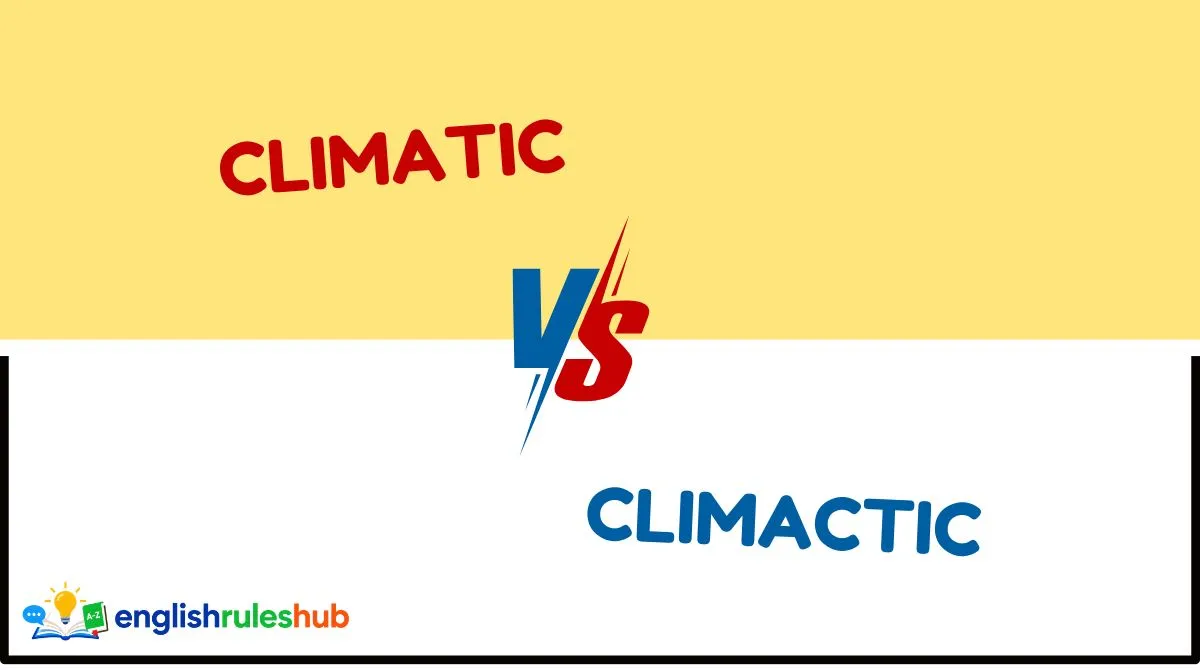
Some English words look almost the same but have very different meanings. Climatic and climactic are perfect examples.
They differ by only one letter, so many English learners think they mean the same thing. Even native speakers sometimes confuse these two words because they are spelled and pronounced in a similar way.
This confusion can lead to funny or even embarrassing mistakes. Imagine writing, “The movie had a climatic ending.”
A reader might wonder why you are talking about the weather! What you probably wanted to say was climactic, which means exciting or the most important part of something.
Knowing the difference between these words is important for school, work, exams, and everyday writing. It also helps you speak more confidently and avoid common grammar mistakes.
By the end of this guide, you will clearly understand what climatic means, what climactic means, how they are different, and when to use each one correctly.
You will also see many simple examples, grammar rules, and easy memory tips that make these words much easier to remember.
If you have ever stopped while writing and wondered, “Should I use climatic or climactic?” you are in the right place. After reading this guide, choosing the correct word will become much easier.
What Does “Climatic” Mean?
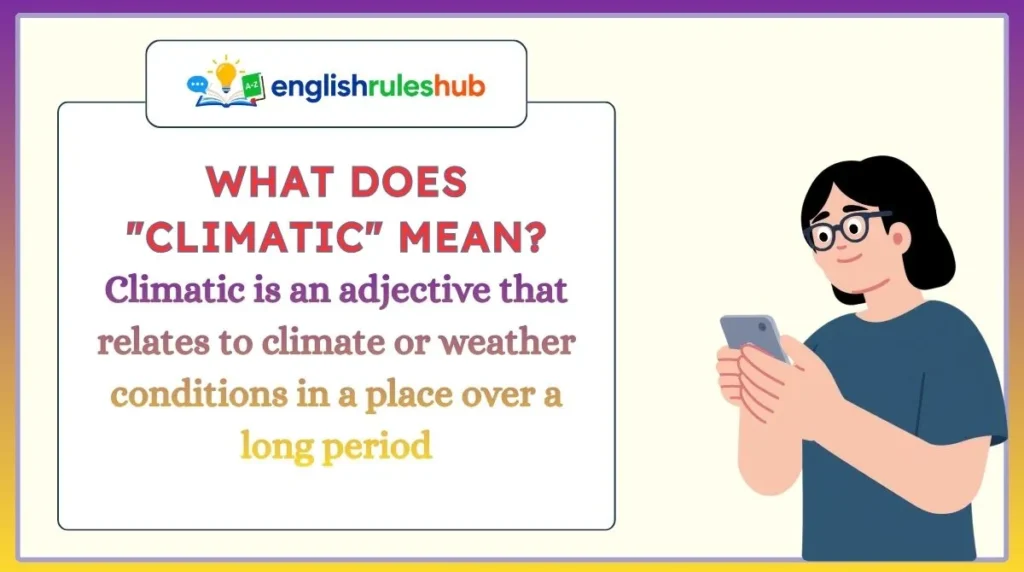
Climatic is an adjective that relates to climate or weather conditions in a place over a long period. Whenever you are talking about temperature, rainfall, seasons, humidity, global warming, or the environment, climatic is usually the correct word.
The word comes from climate, so its meaning is always connected to weather or long-term environmental conditions.
When to Use “Climatic”
Use climatic when talking about:
- Climate and weather patterns
- Environmental conditions
- Long-term weather changes
- Geography
- Agriculture
- Climate research
- Global warming
If the sentence is about weather, temperature, or the environment, choose climatic.
Grammar Rule for “Climatic”
Climatic is an adjective. It describes nouns that are related to climate.
Pattern:
Climatic + noun
Examples:
- climatic conditions
- climatic changes
- climatic zone
- climatic factors
- climatic differences
- climatic effects
Notice that climatic comes before the noun it describes.
Example Sentences Using “Climatic”
Here are some easy examples:
- The country has different climatic conditions in the north and south.
- Scientists are studying climatic changes around the world.
- Heavy rain is caused by local climatic factors.
- Farmers must understand the climatic conditions before planting crops.
- The island enjoys warm climatic conditions all year.
- Climatic differences affect the kinds of plants that grow there.
- Many animals move because of climatic changes.
- The government is working to reduce the effects of climatic change.
Common Learner Confusion
Many learners mistakenly use climatic when talking about an exciting ending in a story or movie.
❌ The novel has a climatic ending.
This is incorrect because the sentence is not about weather or climate.
✅ The novel has a climactic ending.
A simple question can help:
Is the sentence about weather or climate?
- If yes, use climatic.
- If no, another word may be correct.
Another common mistake is thinking that climatic means “important” because it looks similar to climactic. It does not. Its meaning is limited to climate and environmental conditions.
Writers, students, and even experienced English speakers sometimes confuse these words because their spelling is so close. However, remembering that climatic comes directly from climate makes the choice much easier.
When you see words like weather, temperature, rainfall, seasons, environment, or global warming, you should immediately think of climatic.
What Does “Climactic” Mean?
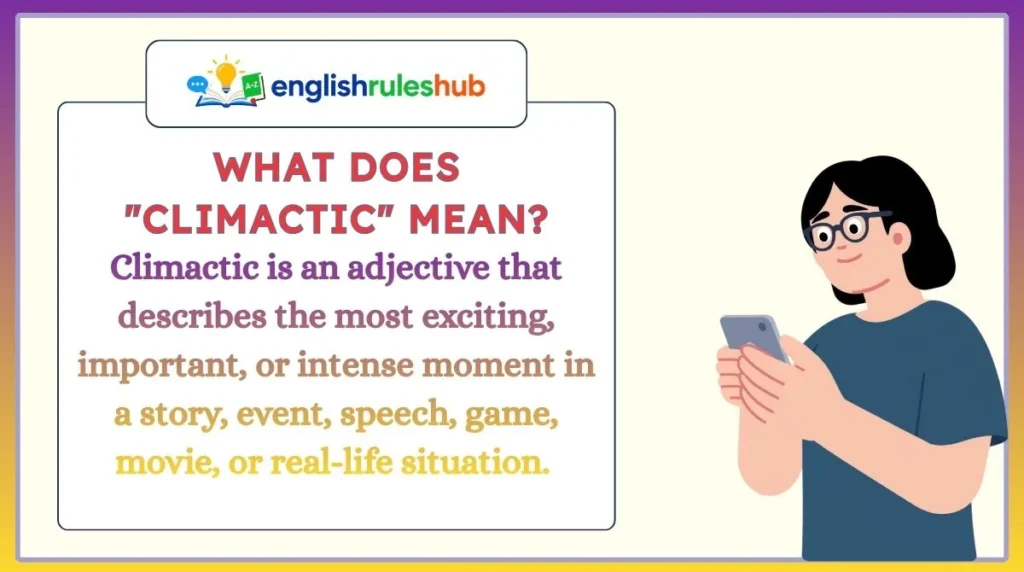
Climactic is an adjective that describes the most exciting, important, or intense moment in a story, event, speech, game, movie, or real-life situation. It comes from the word climax, which means the highest point or turning point of something.
Unlike climatic, this word has nothing to do with weather or climate.
Whenever something builds up to a powerful ending or reaches its most important moment, climactic is the correct word to use.
When to Use “Climactic”
Use climactic when talking about:
- The final scene of a movie
- The most exciting part of a story
- The turning point in a novel
- A dramatic sports event
- An emotional speech
- A major moment in history
- The peak of an argument or discussion
If the sentence is about the highest point, most exciting moment, or dramatic ending, choose climactic.
Grammar Rule for “Climactic”
Climactic is also an adjective. It describes nouns that refer to an event, scene, moment, or experience.
Pattern:
Climactic + noun
Examples:
- climactic moment
- climactic scene
- climactic ending
- climactic battle
- climactic speech
- climactic event
- climactic conclusion
The adjective comes before the noun it describes.
Example Sentences Using “Climactic”
These examples show the correct use of climactic.
- The movie ended with a climactic battle.
- Everyone waited for the climactic moment in the competition.
- The author wrote a climactic ending that surprised every reader.
- The final chapter is the most climactic part of the book.
- The football match had a climactic finish in extra time.
- Her speech reached a climactic point when the audience stood and applauded.
- The play ended with a climactic scene that made everyone emotional.
- The last episode delivered a truly climactic conclusion.
Common Learner Confusion
Many students accidentally replace climactic with climatic because the words look almost identical.
For example:
❌ The film had a climatic ending.
This sentence is incorrect because movies do not usually have weather-related endings.
✅ The film had a climactic ending.
Here is another example:
❌ It was the climatic moment of the race.
✅ It was the climactic moment of the race.
Whenever you mean the most exciting or important part, always use climactic.
A helpful question is:
Is the sentence about the highest point of an event?
- If yes, use climactic.
- If no, think carefully about whether another word fits better.
Remember that climactic comes from climax, not climate.
Difference Between Climatic and Climactic (Detailed)
Although these two words differ by only one letter, their meanings are completely different. Understanding this difference will help you avoid one of the most common vocabulary mistakes in English.
Quick Comparison Table
| Feature | Climatic | Climactic |
|---|---|---|
| Meaning | Related to climate or weather | Related to the climax or highest point |
| Comes from | Climate | Climax |
| Part of Speech | Adjective | Adjective |
| Used For | Weather, seasons, environment | Stories, movies, events, speeches |
| Common Nouns | Conditions, changes, zones, factors | Moment, scene, ending, battle |
| Main Idea | Weather | Excitement or peak |
| Example | Climatic conditions | Climactic ending |
Meaning Difference
The biggest difference is their meaning.
Climatic refers to climate, weather, and environmental conditions over time.
Example:
- The desert has harsh climatic conditions.
The sentence is about weather.
Climactic refers to the climax, or the most exciting and important part of something.
Example:
- The movie had a climactic ending.
The sentence is about the final exciting scene.
Usage Difference
Use climatic in topics such as:
- Geography
- Science
- Weather reports
- Climate research
- Farming
- Environmental studies
Examples:
- Climatic changes affect farming.
- Climatic conditions vary across the country.
- Scientists study climatic patterns.
Use climactic in topics such as:
- Books
- Movies
- TV shows
- Plays
- Sports
- Speeches
- Real-life events
Examples:
- The race had a climactic finish.
- The novel ends with a climactic surprise.
- The debate reached a climactic moment.
Grammar Logic
Both words are adjectives, but they describe different kinds of nouns.
Climatic describes nouns connected with climate.
Examples:
- climatic conditions
- climatic zone
- climatic effect
- climatic pattern
Climactic describes nouns connected with important moments.
Examples:
- climactic scene
- climactic speech
- climactic battle
- climactic chapter
If the noun relates to weather, use climatic.
If the noun relates to excitement or the highest point, use climactic.
Sentence Structure Difference
The sentence structures are similar because both words are adjectives.
Structure 1
Subject + be + climatic + noun
Example:
- The region has climatic differences.
Structure 2
Subject + be + climactic + noun
Example:
- The story has a climactic ending.
The grammar stays the same. Only the meaning changes.
Meaning Comparison with Easy Examples
Look at these pairs.
Weather
✅ The island has a tropical climatic pattern.
❌ The island has a tropical climactic pattern.
Movie
✅ The movie ends with a climactic fight.
❌ The movie ends with a climatic fight.
Environment
✅ Scientists are studying climatic changes.
❌ Scientists are studying climactic changes.
Novel
✅ The writer created a climactic final chapter.
❌ The writer created a climatic final chapter.
Sports
✅ The match ended with a climactic goal.
❌ The match ended with a climatic goal.
A Simple Way to Choose the Correct Word
Ask yourself one question:
Am I talking about weather or the most exciting moment?
If the answer is weather, choose climatic.
If the answer is the highest or most exciting point, choose climactic.
This simple habit will help you make the correct choice almost every time.
Grammar Rules You Must Remember
Understanding a few simple grammar rules can help you use climatic and climactic correctly every time. Since both words are adjectives, the grammar is not difficult. The real challenge is choosing the word with the correct meaning.
Here are the most important rules every English learner should remember.
Rule #1: Use Climatic Only for Climate or Weather
The word climatic is connected with climate, weather patterns, seasons, temperature, rainfall, and the environment. If your sentence is about nature or long-term weather conditions, climatic is the right choice.
Correct examples:
- The country has different climatic zones.
- Farmers watch climatic conditions before planting crops.
- Scientists study climatic changes every year.
- The region is famous for its warm climatic conditions.
Incorrect example:
❌ The play had a climatic ending.
Correct version:
✅ The play had a climactic ending.
Tip: If you can replace the word with weather-related, then climatic is correct.
Rule #2: Use Climactic for the Most Important or Exciting Moment
The word climactic comes from climax, which means the highest or most exciting point of something. Use it when talking about stories, movies, speeches, competitions, or real-life events.
Correct examples:
- The film ends with a climactic battle.
- The book has a climactic final chapter.
- The football match had a climactic finish.
- Her speech reached a climactic moment.
Incorrect example:
❌ Scientists are studying climactic changes.
Correct version:
✅ Scientists are studying climatic changes.
Tip: If you can replace the word with dramatic, important, or exciting, then climactic is probably the correct choice.
Rule #3: Both Words Are Adjectives
Many learners think these words are different parts of speech, but they are not. Climatic and climactic are both adjectives. They describe nouns.
Look at these examples:
| Adjective | Noun |
|---|---|
| climatic | conditions |
| climatic | change |
| climatic | factors |
| climactic | scene |
| climactic | ending |
| climactic | moment |
Examples:
- The climatic conditions are changing.
- The climactic scene made everyone cry.
- We studied the climatic patterns of Asia.
- The audience loved the climactic ending.
Since both are adjectives, they usually come before the noun they describe.
Rule #4: Think About the Topic Before Choosing the Word
The easiest way to avoid mistakes is to think about the topic of your sentence.
Ask yourself:
Is this sentence about weather?
If yes, use climatic.
Is this sentence about the highest or most exciting point?
If yes, use climactic.
Examples:
Weather topic
- Heavy rain is caused by climatic factors.
- The island has unique climatic conditions.
Story topic
- The novel has a climactic ending.
- The race ended with a climactic finish.
This simple question can save you from making the wrong choice.
Common Mistakes Students Make
Because these two words look so similar, they are often mixed up. The good news is that once you know why the mistakes happen, they become much easier to avoid.
Here are the most common mistakes.
Mistake #1: Using Climatic Instead of Climactic
This is the mistake learners make most often.
Wrong:
- The movie had a climatic ending.
- The race reached its climatic moment.
- The book finishes with a climatic scene.
Correct:
- The movie had a climactic ending.
- The race reached its climactic moment.
- The book finishes with a climactic scene.
Why does this happen?
Students notice that the words look almost the same and choose the wrong one without thinking about the meaning.
Easy correction tip:
If the sentence is about a story, movie, game, speech, or exciting event, choose climactic.
Mistake #2: Using Climactic When Talking About Weather
This mistake is less common but still happens.
Wrong:
- The country has climactic conditions.
- Scientists study climactic change.
- The climactic pattern affects farming.
Correct:
- The country has climatic conditions.
- Scientists study climatic change.
- The climatic pattern affects farming.
Why does this happen?
Some learners remember that climactic sounds more familiar, so they use it everywhere.
Easy correction tip:
Weather always points to climatic.
Mistake #3: Thinking the Words Are Interchangeable
Some learners believe they can replace one word with the other because they are both adjectives.
That is not true.
Compare these sentences:
✅ The desert has harsh climatic conditions.
✅ The movie has a climactic ending.
The words cannot switch places because they have different meanings.
Mistake #4: Ignoring the Word Origin
Knowing where the words come from makes them much easier to remember.
- Climate → Climatic
- Climax → Climactic
If you remember the root word, you will usually choose the correct adjective.
Mistake #5: Guessing Based on Spelling
Many learners quickly read the sentence and choose the word that “looks right.”
For example:
❌ The football match ended with a climatic goal.
A football goal has nothing to do with weather.
✅ The football match ended with a climactic goal.
Always read the whole sentence before deciding.
Easy Correction Tips
Here are a few habits that can help you avoid confusion:
- Look for weather words like rain, temperature, season, or climate. These usually require climatic.
- Look for story words like ending, scene, battle, speech, or moment. These usually require climactic.
- Remember the root words: climate and climax.
- Read the sentence again after writing it. Ask yourself if the meaning makes sense.
- Practice with real examples instead of memorizing definitions.
The more you see these words in context, the more natural they will become.
Easy Trick to Remember the Difference
A simple memory trick can help you remember these words for a long time.
Trick #1: Climate = Climatic
Notice that climatic contains almost the whole word climate.
Climate → Climatic
So whenever you think about:
- Weather
- Rain
- Snow
- Heat
- Cold
- Seasons
your brain should automatically think climatic.
Example:
- Climatic conditions affect farming.
Trick #2: Climax = Climactic
The word climactic comes from climax.
A climax is the most exciting part of a story or event.
Think about:
- The final battle in a movie
- The winning goal in a football match
- The last chapter of a novel
- The biggest moment in a speech
These are all climactic moments.
Example:
- The movie ends with a climactic battle.
A Real-Life Memory Tip
Imagine you are watching a movie during a rainy day.
The rain outside is about the climate, so think climatic.
The exciting final scene on your TV is the climax, so think climactic.
One word belongs to nature.
The other belongs to stories and exciting events.
This picture is easy to remember and can help you choose the right word in just a few seconds.
Daily Life Examples (Very Important)
The best way to remember climatic and climactic is to see them in everyday situations. Reading real-life examples helps you understand how native speakers use these words naturally.
The examples below use simple English and common situations that students, workers, and travelers may experience.
Everyday Examples with Climatic
- We chose to visit the mountains because the climatic conditions are cooler in summer.
- Farmers are worried because recent climatic changes have reduced the amount of rain.
- The two cities have very different climatic conditions, even though they are in the same country.
- Some fruits only grow well under certain climatic conditions.
- Scientists continue to study how climatic changes affect wildlife.
Everyday Examples with Climactic
- The movie ended with a climactic fight between the hero and the villain.
- Everyone cheered during the climactic moment of the football match.
- The final chapter of the novel was emotional and climactic.
- Her speech became climactic when she shared her personal story.
- The singing competition ended with a climactic performance that impressed the judges.
Short Conversations
Seeing the words in conversations makes them even easier to understand.
Conversation 1: Planning a Trip
Ali: Why are you visiting that city in winter?
Sara: Because the climatic conditions are perfect at that time of year.
Conversation 2: Talking About a Movie
Ahmed: Did you enjoy the film?
Bilal: Yes! The climactic ending was amazing.
Conversation 3: School Discussion
Teacher: Why do different plants grow in different places?
Student: Because of different climatic conditions.
Conversation 4: After a Football Match
Friend 1: Did you watch the final?
Friend 2: Yes. The winning goal came in the last minute. It was such a climactic moment!
Conversation 5: Book Club
Aisha: Was the novel interesting?
Fatima: Very much. The climactic chapter kept me reading until midnight.
More Practice Examples
Choose the correct word before looking at the answer.
- The scientist explained the ________ changes affecting the Arctic.
- The audience loved the ________ ending of the play.
- The country has several different ________ zones.
- The race reached its ________ moment in the final lap.
- Farmers depend on favorable ________ conditions.
Answers:
- climatic
- climactic
- climatic
- climactic
- climatic
Notice the pattern:
- Weather and environment → climatic
- Stories and exciting moments → climactic
The more you practice with real-life examples, the easier these words become.
Practice Section
Now it’s your turn! Read each sentence carefully and choose the correct word: climatic or climactic.
Practice Questions
1. The movie ended with a ________ scene that surprised everyone.
A. climatic
B. climactic
2. Different ________ conditions affect the crops grown in each region.
A. climatic
B. climactic
3. The final minutes of the match were the most ________ part of the game.
A. climatic
B. climactic
4. Scientists are studying long-term ________ changes around the world.
A. climatic
B. climactic
5. The novel reaches a ________ ending that readers never forget.
A. climatic
B. climactic
Answers
1. B — climactic
The sentence talks about the exciting final scene of a movie.
2. A — climatic
The sentence is about weather and climate.
3. B — climactic
The final minutes are the most exciting part of the game.
4. A — climatic
Scientists study climate, not exciting moments.
5. B — climactic
A novel has a climactic ending, not a climatic one.
Bonus Challenge
Fill in the blanks with climatic or climactic.
- The desert has harsh __________ conditions.
- The audience applauded during the __________ speech.
- Heavy snowfall is caused by local __________ factors.
- The championship ended with a __________ goal.
- The researchers examined __________ patterns over the last fifty years.
Bonus Challenge Answers
- climatic
- climactic
- climatic
- climactic
- climatic
If you answered all of them correctly, you have a solid understanding of the difference between these two commonly confused words.
Frequently Asked Questions (FAQs)
1. What is the difference between climatic and climactic?
Climatic relates to climate, weather, and environmental conditions. Climactic relates to the climax, which is the most exciting or important part of a story, event, or experience. Although the words look similar, their meanings are completely different.
2. Can climatic and climactic be used interchangeably?
No. These words cannot replace each other because they describe different ideas. Use climatic for weather-related topics and climactic for exciting or dramatic moments.
3. Can I use climactic in questions?
Yes. Climactic can be used in questions just like any other adjective.
Examples:
- Was the ending climactic?
- Which chapter was the most climactic?
- Did you enjoy the climactic final scene?
4. Is climatic formal or informal?
Climatic is a standard English adjective used in both formal and informal contexts. It commonly appears in science, geography, environmental studies, news reports, and everyday conversations about weather.
5. Is climactic formal or informal?
Climactic is also standard English. It is widely used in book reviews, movie reviews, sports reporting, speeches, essays, and everyday conversations when describing an exciting or important moment.
6. How can I remember the difference easily?
Think about the root words:
- Climate → Climatic → Weather
- Climax → Climactic → Most exciting moment
If your sentence is about weather, choose climatic. If it is about the highest point of an event, choose climactic.
Final Conclusion
At first glance, climatic and climactic seem almost identical, but they describe two completely different ideas.
Climatic is always connected with climate, weather, and environmental conditions, while climactic refers to the most exciting, dramatic, or important moment in a story, event, speech, game, or experience.
A simple way to avoid mistakes is to remember their root words. Climate leads to climatic, and climax leads to climactic.
Whenever you are unsure, ask yourself whether the sentence is about weather or about the highest point of an event. The answer will quickly guide you to the correct word.
Learning confusing word pairs takes practice, but every correct sentence helps build your confidence.
\Read books, watch movies, and notice how these words are used in real situations. Before long, choosing between climatic and climactic will feel natural.
Keep practicing with new examples, and you’ll avoid this common English mistake with ease.

I am Benjamin Clark, an English language writer passionate about simplifying grammar, vocabulary, and word meanings. I create clear, accurate, and practical content to help learners improve their English skills with confidence every day.